The Patience Principle: How Letting Beer Rest Longer Is Producing the South's Most Interesting Pints
The Patience Principle: How Letting Beer Rest Longer Is Producing the South's Most Interesting Pints
There's a running joke in craft brewing circles that the most expensive ingredient in any recipe isn't the hops, the grain bill, or even the yeast — it's time. And for a growing number of Southern brewers, that joke has become something closer to a philosophy.
In an industry where tap turnover pressure is relentless and the economics of brewing reward speed, a quieter movement is taking root below the Mason-Dixon line. Brewers are pulling back on the throttle, letting fermentation unfold on its own schedule, and producing beers that taste like they were made by someone who genuinely wasn't in a hurry. Which, more often than not, they weren't.
What Slow Fermentation Actually Means
Before we get into the why, it helps to nail down the what. Fermentation speed is primarily driven by three things: yeast strain, temperature, and the density of the wort being fermented. Most commercial and craft breweries optimize all three for efficiency — pitching aggressive yeast strains, holding temperatures at the upper range of the yeast's tolerance, and keeping original gravities in a range that lets the yeast chew through sugars quickly.
Slow fermentation flips that logic. It typically involves lower fermentation temperatures, more restrained yeast pitching rates, and sometimes longer conditioning periods after primary fermentation wraps up. The yeast works, but it works at its own pace. Stress on the yeast cells is reduced. Off-flavor compounds — the fusels, the acetaldehyde, the sulfuric notes that give beer that "green" quality — have more time to be reabsorbed and cleaned up by the yeast itself.
The result, when it works, is a beer with a cleaner fermentation character, more nuanced ester development, and a finish that lingers without any of the harsh edges that rushed fermentation can leave behind.
The Southern Paradox: Heat as an Asset
Here's where it gets interesting, and where Southern brewers have a genuinely unique angle to work with. The conventional wisdom has always been that Southern heat is a brewing liability. Yeast gets stressed in warm conditions. Fermentation runs hot and fast, producing off-flavors. Temperature control infrastructure becomes a major expense.
But a handful of brewers across the region are reframing that narrative. Rather than fighting the ambient warmth, they're using it strategically — and drawing on fermentation traditions that predate refrigeration entirely.
Hot-climate brewing has a long global history. Belgian farmhouse ales were fermented in warm barns during summer harvests. German kellerbier traditions involved cool cellaring, yes, but those cellars were built specifically to counteract ambient heat. Certain styles of African and Latin American traditional fermented beverages rely entirely on ambient temperature and wild yeast populations.
Southern brewers are tapping into that same logic. Some are using the region's natural temperature swings — warm days, cooler nights — to create a kind of passive temperature cycling that influences ester development in ways a controlled fermentation chamber simply can't replicate. Others are selecting yeast strains that actually perform better and produce more interesting flavor compounds at slightly elevated temperatures, then conditioning the beer slowly in cooler spaces to let those flavors integrate.
It's not about ignoring temperature — it's about understanding how to use it rather than just suppress it.
What the Brewers Are Actually Saying
Talk to brewers who've committed to slower timelines and you'll hear a consistent theme: the beer tells you when it's ready, and it's almost never as soon as you'd like.
One brewer working out of a small operation in the Tennessee hill country described extending his farmhouse ale fermentation from the industry-standard ten to fourteen days out to nearly four weeks, with an additional two-week cold conditioning period. The change wasn't driven by a recipe tweak or a new yeast strain — it was driven by tasting the beer at each stage and realizing it kept getting better the longer he left it alone.
"There's a point where you taste it and think it's done," he explained. "And then you taste it two weeks later and realize you had no idea what done actually looked like."
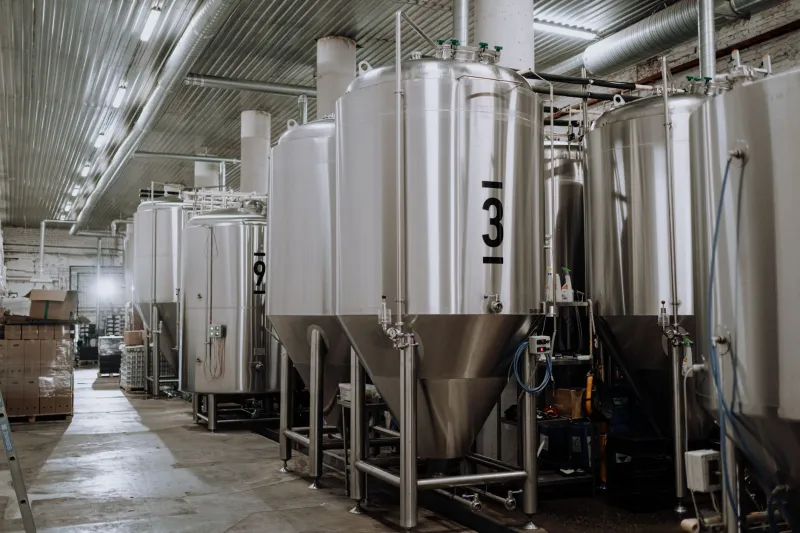
That kind of patience has real costs. Tank space is finite. Slow-fermented beers tie up equipment that could be cycling through faster batches. The economics only work if you're either running a small enough operation that throughput pressure is manageable, or you've built a customer base willing to pay for — and wait for — the product.
But the brewers doing it aren't complaining about the tradeoff. They're describing beers with aromatic complexity that surprised even them. Esters that developed over time into something more refined than the initial fermentation suggested. Malt characters that integrated with hop bitterness in ways that feel almost architectural — everything in its place, nothing fighting for attention.
The Science Backs Them Up
This isn't just anecdote. The fermentation science here is well-documented, even if it's underutilized in production settings.
Yeast produces a range of flavor compounds throughout fermentation, and many of the less desirable ones — particularly acetaldehyde, which gives beer a green apple character, and diacetyl, which produces that buttery or butterscotch note — are actually reabsorbed by healthy yeast cells during the later stages of fermentation if given enough time. Rush the process, crash the temperature too early, or pitch too aggressively, and those compounds get locked into the finished beer.
Slow fermentation also tends to favor the development of certain esters — the fruity, floral aromatic compounds that define styles like hefeweizens, Belgian tripels, and English ales. Ester formation is a byproduct of yeast metabolism, and the specific profile of esters produced depends heavily on fermentation temperature and the rate at which the yeast is working. Lower and slower generally means more nuanced ester development rather than the broad, sometimes harsh fruitiness that comes from a yeast population running hot and hard.
For Southern brewers working with styles that lean into those aromatic qualities — saisons, farmhouse ales, wheat beers, and even certain lager-adjacent styles — the patience principle isn't just philosophically appealing. It's scientifically sound.
What This Means for What's in Your Glass
If you've ever had a craft beer that felt somehow more complete than you expected — where the flavors seemed to fit together rather than compete, where the finish was clean without being thin, where the aroma kept shifting as the beer warmed in the glass — there's a reasonable chance time had something to do with it.
The beers coming out of breweries committed to slow fermentation tend to share a quality that's hard to name but easy to recognize. They feel considered. Not in a precious or overthought way, but in the way that food made by someone who wasn't rushing tastes different from food that was. The process shows up in the product.
Down here at Grav South, that idea isn't just appealing in the abstract — it's the kind of brewing philosophy that fits the pace and character of the region. The South has never been in a particular hurry, and increasingly, that's not a weakness. It's the whole point.
The best pint you'll drink this year might already be sitting in a tank somewhere, quietly becoming itself. Give it time.