The Glass Is Part of the Recipe: A Proud Brewer's Guide to Drinking Craft Beer Right
The Glass Is Part of the Recipe: A Proud Brewer's Guide to Drinking Craft Beer Right
Let's get one thing straight before we go any further: we're not snobs about it. We'll drink a cold one off a tailgate, out of a koozie, standing in a gravel parking lot with the cicadas screaming. That's fine. That's good, even.
But when you're sitting down with a beer we spent weeks crafting — adjusting gravity readings, coaxing yeast through a hot fermentation, dry-hopping with care — we'd love for the glass to do its part. Because here's the truth most people don't know: the vessel you drink from changes the beer. Not a little. A lot.
This isn't pretension. It's physics, chemistry, and just a little bit of Southern pride in doing things right.
Why Shape Changes Everything
A beer glass isn't just a container. The shape controls how carbonation behaves, how aroma reaches your nose, how temperature holds, and how the liquid hits your palate. That's four variables before you even take a sip.
When a glass narrows at the top — like a tulip or a snifter — it traps volatile aromatic compounds and funnels them straight to your nose. When a glass flares outward, like a classic pint, it lets those aromas dissipate faster. Neither is wrong, exactly, but one is working harder for certain styles than the other.
Carbonation is equally affected. A nucleation point — those tiny etched marks you sometimes see at the bottom of craft beer glasses — creates a steady stream of bubbles that keeps a beer lively from first sip to last. A smooth, unscratched surface lets carbonation go flat faster. The difference between a beer that's singing at the halfway mark and one that's gone limp is sometimes nothing more than the glass it's sitting in.
The Lineup: Common Styles and What They're Actually For
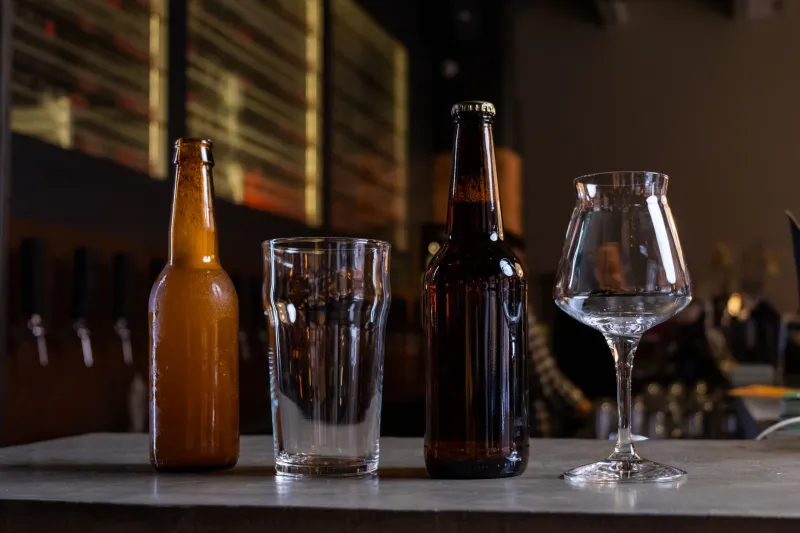
The Shaker Pint This is the workhorse of American bar culture, and honestly, it's a little overused. The classic 16-ounce shaker pint was designed for — you guessed it — cocktail shaking, not beer serving. It's fine for an American lager or a session ale when you're moving fast and volume matters. But it does almost nothing to preserve aroma or carbonation in more complex styles. We keep a few around, but we're not leading with them.
The Tulip This is our house favorite at Grav South for a reason. The tulip's curved body and flared lip create a natural collection point for aromatics while still allowing a proper head to form and hold. It works beautifully with IPAs, Belgian ales, saisons, and anything with a hop-forward or ester-driven profile. If you only own one dedicated craft beer glass, make it a tulip.
The Weizen Glass Tall, narrow at the base, and curved out toward the top — this glass was born for hefeweizens and wheat beers. The height accommodates the enormous, pillowy head these styles produce, and the shape showcases the beer's haze and color. Pour a proper hefeweizen into one of these and you'll understand immediately why presentation is part of the experience.
The Snifter Borrowed from the brandy world and claimed proudly by craft beer. The snifter is made for high-gravity, warming styles — imperial stouts, barleywines, barrel-aged ales. The wide bowl lets you swirl and open up those dense, layered aromas. The narrow top concentrates them. These beers deserve contemplation, and the snifter enforces it.
The Stange A simple, straight-sided cylinder — traditional for Kölsch and other delicate German lagers. It keeps the beer cold, maintains carbonation, and doesn't try to do too much. Sometimes restraint is the right call.
The Tulip Pint (or Nonic) Common in British pub culture, this glass has a slight bulge near the top that gives it grip and structure. It's a solid all-purpose option — better than the shaker pint for most styles, and unpretentious enough for everyday drinking. We like it for pale ales and amber lagers.
The Pour Itself Is a Statement
Once you've got the right glass, the pour matters more than most people realize. A proper pour isn't about showing off — it's about activating the beer.
Tilt the glass at 45 degrees and pour down the side to start. At about halfway, straighten the glass and pour down the center to build the head. That head isn't just foam for the sake of foam — it's a concentrated burst of aroma sitting right at the surface, waiting for your nose to meet it. Pouring flat into a straight glass and leaving no head is like cooking a great meal and forgetting to season the plate.
For high-carbonation styles like Belgian tripels or hefeweizens, you might want a more aggressive pour to fully express the beer. For a nitro stout, pour hard and straight and watch the cascade do its thing. Every style has its rhythm.
Temperature and Glassware Work Together
A cold glass can be as damaging as the wrong shape. When you pull a glass straight from the freezer, you're chilling the beer too fast and killing carbonation on contact. Frost on the glass also dilutes the first few sips as it melts.
The sweet spot varies by style. Most IPAs and pale ales are best around 45–50°F. Belgian ales and farmhouse styles open up beautifully at 50–55°F. Big imperial stouts and barleywines actually improve as they warm toward 55–60°F — give them ten minutes out of the cooler before you commit.
A room-temperature glass is almost always better than a frozen one. Rinse it with cold water if you want to bring it down slightly without shocking the beer.
Southern Hospitality Means Sweating the Details
Around here, the way you serve something is a form of respect — for the guest, for the food or drink, and for the work that went into making it. We don't think twice about ironing a tablecloth or making sure the sweet tea is fresh. Beer deserves the same consideration.
When we pour at Grav South, we're not performing. We're completing the process. The grain, the water, the yeast, the hops, the weeks of waiting — all of it leads to the moment the beer hits the glass. Getting that last step right isn't extra. It's just finishing the job.
So next time you crack open something you care about, grab the right glass, pour with a little intention, and let the beer do what it was made to do. You'll taste the difference. We promise.