Brewing Under the Sun: How Southern Heat Is Reshaping the Craft Beer Being Made Down Here
There's a moment in late July, somewhere around 2 p.m., when you step outside a Southern brewery and the heat hits you like a door swinging open on a preheated oven. The air is thick. The pavement is shimmering. And somewhere inside that building, behind insulated walls and humming glycol chillers, a brewer is watching a fermentation temperature readout with the focused intensity of someone defusing something.
That's the reality of craft brewing in the South. And it's shaping the beer in ways that don't show up on the label but absolutely show up in the glass.
Fermentation Has an Enemy, and It Lives Here Year-Round
Temperature is the single most important variable in fermentation. Yeast are living organisms with preferences — push them too warm and they produce off-flavors, fusel alcohols, and esters that can make a clean pale ale taste like a banana runoff. Most ale yeasts perform best somewhere in the 65–72°F range. In a Southern summer, ambient temperatures can sit above 95°F for weeks at a time, and brewery interiors without serious climate control can climb well past that.
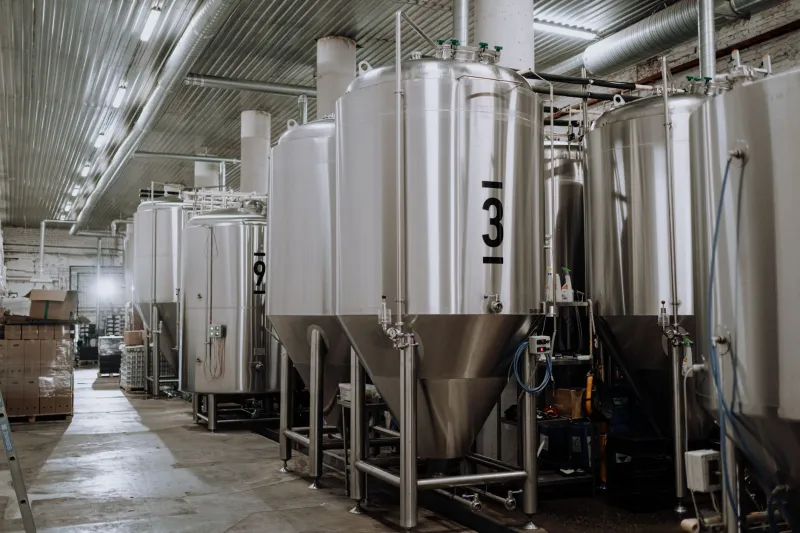
For small and mid-sized craft operations, maintaining fermentation temperature isn't just a technical challenge — it's an ongoing operational cost that can make or break a batch. Glycol chilling systems, jacketed fermenters, and insulated cellars are standard equipment in any serious brewery, but the Southern climate demands that these systems work overtime from May through September. Equipment that would coast comfortably in a Pacific Northwest brewery is running near capacity here for months.
The margin for error shrinks in the heat. A glycol chiller that goes down in December in Tennessee is an inconvenience. In August, it's a potential loss of thousands of dollars in fermenting beer within hours.
The Humidity Problem Nobody Talks About
Heat gets all the attention, but humidity is the quieter antagonist. High ambient humidity affects everything from grain storage to hop quality to the behavior of wild microorganisms in the air.
Grain absorbs moisture. Specialty malts stored improperly in a humid environment can develop off-flavors before they ever touch a mash tun. Breweries in the South have to be meticulous about storage conditions — airtight containers, climate-controlled rooms, faster inventory turnover — in ways that their counterparts in drier climates simply don't.
Hops are even more sensitive. The resins and oils that give hops their character degrade with heat and moisture exposure. Cold storage is non-negotiable, and the logistics of getting hop shipments from the Pacific Northwest or imported from Germany into proper cold storage quickly is a genuine operational consideration that adds cost and complexity.
Then there's the wild yeast and bacteria question. The South is biologically active in ways that excite sour beer enthusiasts and terrify everyone else. Warm, humid air carries a diversity of microorganisms that can colonize an open fermentation or an improperly cleaned line with remarkable speed. The same environment that makes spontaneous fermentation interesting also makes contamination control a constant discipline.
How Southern Breweries Are Adapting
The response to all of this hasn't been retreat — it's been ingenuity.
Some breweries have restructured their brewing calendars around the climate rather than fighting it. Heavy, high-gravity styles — imperial stouts, barleywines, winter warmers — get brewed in the fall and winter when fermentation is easier to manage and the resulting beer can condition through the warmer months. Summer production shifts toward lower-gravity styles that ferment faster, cleaner, and with less thermal stress: session lagers, light wheat beers, gose, Berliner Weisse.
This isn't just a practical workaround. It's actually creating a more authentic seasonality in Southern craft beer than the industry sometimes manages in more temperate climates. When a Southern brewery releases a crisp, slightly tart gose in June, it's not following a trend — it's solving a real problem with a real solution that happens to taste exactly right for the weather.
Other breweries have leaned into lager production, which requires cold fermentation and extended lagering time but offers a quality consistency that ales can struggle to maintain in high-ambient-temperature environments. The investment in refrigeration infrastructure is significant, but the payoff is a product that's stable, clean, and deeply suited to the Southern market's love of a cold, approachable beer.
Climate Is Writing the Flavor Profile
Here's the part that's genuinely fascinating: the constraints of Southern brewing are starting to produce a recognizable regional character.
The emphasis on lighter, more drinkable styles during peak heat months has pushed Southern craft brewers to develop real technical skill with lagers, wheat ales, and tart styles that require precision rather than just intensity. You can hide a lot of flaws in a double IPA. You can't hide anything in a well-made helles lager.
The local ingredient question is also heating up — pun intended. As more Southern breweries explore locally grown adjuncts — Carolina-grown wheat, Georgia peaches, Louisiana cane sugar, regional honey — they're incorporating ingredients that are inherently shaped by the same climate that challenges their process. The result is beers with a terroir quality that's hard to manufacture from somewhere else.
Water chemistry in the South also plays a role. Soft water profiles common in many parts of the region lend themselves naturally to certain styles — Pilsners, pale lagers, and soft-hopped ales — while requiring more mineral adjustment for styles that need harder water. Brewers who understand their local water and work with it rather than against it are producing beers that feel genuinely of their place.
Stubborn, Sweating, and Still Brewing
There's a particular kind of stubbornness required to brew craft beer through a Southern summer. It's the same disposition that keeps a pitmaster up all night tending a fire, or a farmer pushing through a drought because the alternative isn't really an option.
The brewers doing this work aren't complaining — or at least not much. They're adapting, problem-solving, and turning the constraints of their environment into something that looks a lot like a regional identity. The heat isn't an obstacle they're waiting to overcome. It's a condition they're learning to brew with.
At Grav South, we feel that every time we check a fermentation temperature in August and make the call to adjust, wait, or push forward. The climate is part of what we're working with, not working against. And the beer that comes out the other side of a Southern summer — crisp, considered, and hard-earned — tastes like exactly where it came from.
That's not a limitation. That's a story.