Sweat Equity: How Southern Humidity Is Quietly Supercharging Barrel-Aged Beer
Step outside on a July afternoon anywhere from coastal Georgia to the hill country of Texas, and the air hits you like a warm, wet towel. It's the kind of humidity that fogs your glasses, wilts your shirt, and makes you reconsider every life decision that led you to stand on that particular patch of asphalt. It's also, as a growing number of Southern craft brewers will tell you, quietly making some of the most interesting barrel-aged beer in the country.
This isn't a happy accident. It's science — and increasingly, it's strategy.
What the Barrel Is Actually Doing
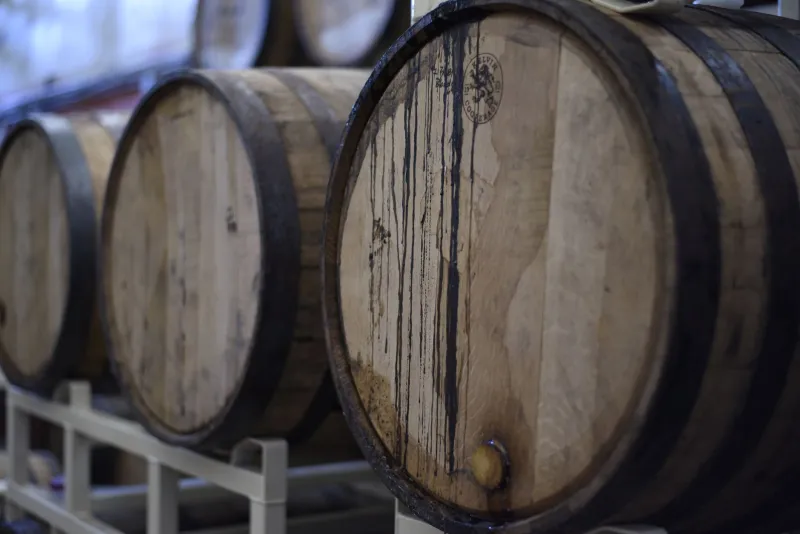
To understand why Southern humidity matters, you have to understand what happens inside a barrel during aging. Wood breathes. It expands in heat and contracts in cooler temperatures, which pulls liquid into the staves and pushes it back out again in a slow, rhythmic exchange that can last months or years. During that process, the beer picks up compounds from the wood itself — vanillin, tannins, lactones — as well as whatever previously lived in the barrel, whether that's bourbon, rum, wine, or something else entirely.
At the same time, a portion of the liquid evaporates through the wood. Distillers have a romantic name for this: the angel's share. In a traditional Kentucky rickhouse, that loss runs somewhere between 3 and 5 percent per year. In the South, particularly in the coastal lowlands and river valleys where heat and humidity stack on top of each other for six or seven months straight, that number can climb significantly higher — and the character of what evaporates shifts in ways that change the finished product.
Here's the key distinction: in drier climates, alcohol tends to evaporate faster than water, which concentrates the liquid and can make it more intense but also sharper. In humid environments, the reverse is more likely. Water loss slows. The beer holds onto more of its body and sweetness while the wood interaction deepens at an accelerated rate. The result is a rounder, often more integrated flavor profile — one that can take a cooler-climate barrel program years to achieve.
Leaning Into the Climate, Not Fighting It
For a long time, conventional wisdom said Southern brewers had to work around their climate. Keep the barrels cool. Control the temperature swings. Minimize exposure to the worst of the summer heat. The thinking was that the South's extremes were a liability — too hot, too unpredictable, too aggressive for the slow, patient work of barrel aging.
Some brewers have flipped that logic entirely.
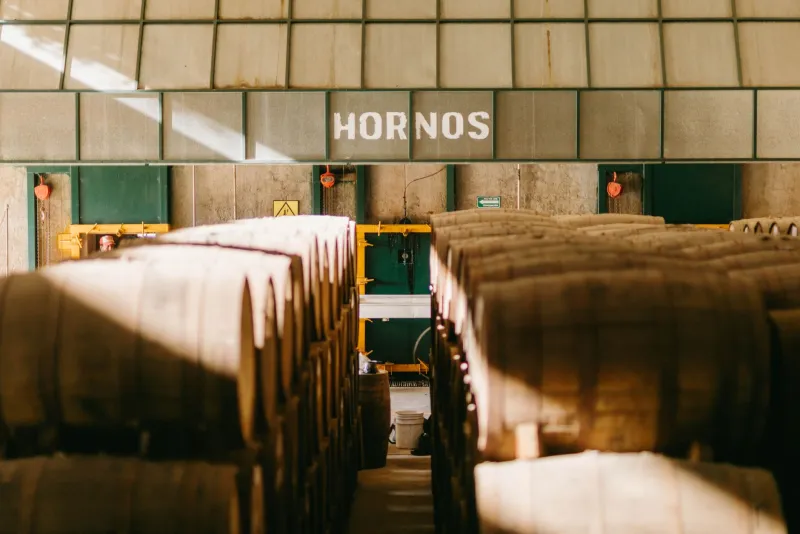
Rather than insulating their barrel rooms from the outdoor environment, they've started designing aging programs that deliberately expose barrels to seasonal fluctuation. That means warehouses that breathe with the weather — structures that let summer heat and humidity cycle through naturally rather than filtering it out. The result is a more dynamic aging process, one where the beer goes through pronounced expansion and contraction cycles that drive deeper extraction from the wood.
Think of it like the difference between a slow simmer and a rolling boil. Both get you somewhere, but they don't get you to the same place.
The Flavor Payoff
What does this actually taste like in the glass? The profiles that emerge from humidity-influenced barrel aging tend to share a few common characteristics.
First, there's a softness to the wood character. Rather than the sharp, almost tannic bite you sometimes get from a beer that's been pushed hard in a dry environment, humidity-aged beers often present their oak notes in a more integrated way — present but not aggressive, woven into the malt backbone rather than sitting on top of it.
Second, the sweetness tends to hold. Because water loss is slower in humid conditions, residual sugars aren't as concentrated. A bourbon barrel stout aged in a humid Southern summer might come out with a pronounced caramel or dark fruit note rather than the boozy intensity that sometimes dominates drier-climate barrel programs.
Third — and this is harder to quantify but easier to taste — there's a sense of place. The South has its own microbial fingerprint, its own ambient character that seeps into open or semi-permeable environments over time. Brewers who've leaned into natural aging conditions often describe a terroir-like quality in their barrel-aged releases, a regional distinctiveness that can't be replicated by following a controlled, climate-adjusted protocol.
The Practical Challenges (And Why They're Worth It)
None of this is free. Humidity-driven aging comes with real tradeoffs that any honest brewer will acknowledge.
The angel's share is higher, which means more product loss. A barrel program that yields 80 barrels in a cooler climate might yield 70 or fewer under Southern conditions, depending on the season and the warehouse setup. That's a meaningful economic hit, especially for smaller operations working with expensive adjuncts or rare base spirits.
There's also the matter of consistency. When you invite the environment into your barrel room, you're accepting some degree of variability. Two barrels filled from the same batch and stored in the same warehouse might taste noticeably different after a Southern summer, depending on where they sat relative to the airflow, the sun exposure on the roof, the humidity gradient from floor to ceiling. Managing that variability — deciding when it's a feature and when it's a flaw — takes experience and a willingness to make judgment calls that a temperature-controlled environment doesn't require.
But the brewers who've committed to this approach tend to see the variability as part of the point. No two batches are exactly alike. Every release is a snapshot of a particular season, a particular summer's worth of heat and moisture and slow wood interaction. That's not a bug. That's the story.
What the South Has Always Known
There's something fitting about the fact that the South's climate — long characterized by outsiders as an obstacle, an inconvenience, a thing to be endured — turns out to be an asset in the hands of people who understand it well enough to work with it rather than against it.
Southern distillers figured this out a long time ago. The reason Kentucky bourbon has its particular character isn't just the corn mash or the charred oak — it's the dramatic seasonal swings, the hot summers and cold winters, the way a rickhouse breathes through the year. Southern craft brewers are arriving at a similar realization, just a little later.
The thick air that makes August feel like a punishment is, inside the right barrel room, doing exactly what you'd want it to do. It's slowing the evaporation of water, softening the wood's edges, and giving the beer time to settle into something that couldn't have been made anywhere else.
Down here, we've always known that patience and heat together produce something worth waiting for. Turns out that applies to what's in the barrel just as much as what's on the table.