Roots in the Glass: How Heirloom Grains Are Giving Southern Craft Beer a Flavor No One Else Can Copy
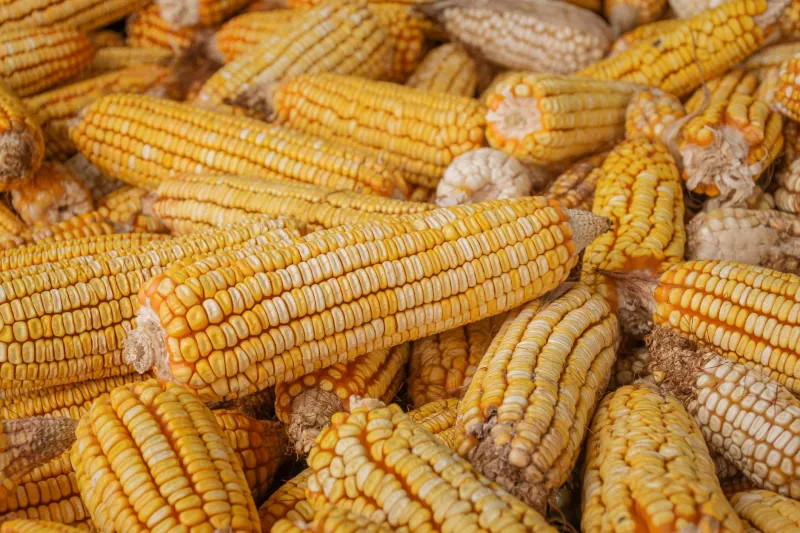
There's a particular kind of corn that almost didn't make it. Jimmy Red — a deep crimson, dual-row heirloom variety — was grown for generations across the Carolinas, mostly by moonshiners who knew what commodity agriculture never cared to find out: that this grain had a richness, a fat content, and a sweetness that no modern hybrid could touch. By the early 2000s, it was down to a handful of ears saved by a single farmer in South Carolina. It came that close to being gone forever.
Today, Jimmy Red is growing again. And a meaningful portion of it is ending up in craft beer.
That's the story playing out across the South right now — not just with Jimmy Red corn, but with Carolina Gold rice, antebellum rye, bloody butcher corn, and other grains that industrial agriculture quietly pushed to the margins over the last century. Southern brewers are tracking these ingredients down, building direct relationships with the farmers who grow them, and producing beers that carry a regional fingerprint you simply cannot fake or ship in from somewhere else.
Why These Grains Disappeared in the First Place
To understand why this movement matters, it helps to understand why heirloom grains nearly vanished. The short version: efficiency won. Post-WWII agricultural industrialization optimized for yield, uniformity, and ease of mechanical harvesting. Heirloom varieties — which tend to be lower-yielding, less predictable, and more labor-intensive — got left behind. The flavors those grains carried got left behind with them.
For brewers working within the commodity malt system, that meant decades of working with ingredients that were reliable but, honestly, kind of flat. Barley is barley when it's been bred primarily for consistent diastatic power and not much else. It does the job. But it doesn't tell a story.
Heirloom grains tell a story. That's kind of the whole point.
The Brewer-Farmer Partnership Is the Product
What's different about this movement — compared to, say, a brewery just sourcing a specialty malt from a regional maltster — is the nature of the relationship between brewer and farmer. These aren't vendor transactions. They're creative collaborations, and in many cases, genuine friendships built around a shared obsession with what the land can actually produce.
A brewer working with a small farm growing antebellum rye isn't just placing an order. They're often involved in conversations about soil health, harvest timing, and storage conditions. They're learning how variability in a grain crop — the kind of variability that commodity agriculture works hard to eliminate — actually creates opportunity in the brewhouse. A wetter growing season might push more sugars into the kernel. A drier one might concentrate the grain's natural spice. That variability isn't a problem to solve. It's a vintage.
Farmers, for their part, get something they rarely get from commodity buyers: a partner who actually cares what the grain tastes like. That changes the economics of growing these crops, which is no small thing. Heirloom varieties require more attention and yield less per acre. Without buyers who'll pay a premium and stick around, it doesn't pencil out for most small farms. Craft brewers — especially ones who've made regional identity part of their brand — are increasingly those buyers.
What It Actually Does to the Beer
This is where things get genuinely interesting from a brewing science standpoint.
Take Carolina Gold rice, which was the dominant rice variety grown in the South Carolina Lowcountry from the colonial era through the Civil War. It's not the same as the long-grain white rice you'd use as a brewing adjunct for lightening body. Carolina Gold has a starchy, almost creamy quality and a subtle nuttiness that carries through fermentation. Brewers who've worked with it describe the resulting beer as having a roundness — a kind of textural softness — that you don't get from modern adjunct rice.
Jimmy Red corn, when malted and mashed, brings a deep, almost buttery corn sweetness that's completely distinct from the thin corn character you'd get from commercial corn syrup or flaked maize. Some brewers use it in lagers, where it shines with almost no competition from hop bitterness. Others are using it in farmhouse-style ales, where the grain's natural complexity plays well against wild or mixed fermentation.
Antebellum rye — grown from seed stocks that predate the Civil War — has a spice profile that's more assertive than modern rye malt, with a kind of earthy, almost peppery depth. In a rye saison or a rye-forward amber, it adds layers that take a few sips to fully unpack.
None of these characteristics are dramatic in a way that announces itself loudly. They're subtle. They're cumulative. They're the difference between a beer that tastes good and a beer that tastes like somewhere specific.
The Identity Question
There's something bigger happening here than just interesting ingredients. Southern food culture has spent the last couple of decades doing serious work to reclaim its agricultural identity — to push back against the narrative that the South is just a market for national brands and a supplier of raw commodities. The revival of heirloom grains in the brewing world is part of that same project.
When a brewery in Georgia or Tennessee or the Carolinas puts Jimmy Red corn or Carolina Gold rice on its label, it's making a claim: that this place has a flavor profile worth protecting, that the relationship between land and food matters, and that what gets grown here — and how it's grown — is worth paying attention to.
For craft beer drinkers who've already bought into the idea that where a beer is made matters, this is a natural extension of that thinking. Terroir isn't just a wine concept. It's a brewing concept too, and Southern brewers working with heirloom grains are making that case more convincingly than anyone.
What to Look For
If you want to find beers made with heirloom grains, your best bet is talking directly to breweries at taprooms or farmers markets. These aren't always beers that make it into wide distribution — the grain supply is limited, the production runs are often small, and the breweries making them tend to be proud enough of the process that they want to tell you about it in person.
Ask what's local. Ask what's seasonal. Ask if the brewer knows the farmer by name. If the answer to that last one is yes, you're probably about to drink something worth slowing down for.
The South has always had flavors that belonged to it. It's good to see them finding their way back into the glass.