She Built the Brewery: How Women Across the South Are Changing What Craft Beer Looks Like From the Ground Up
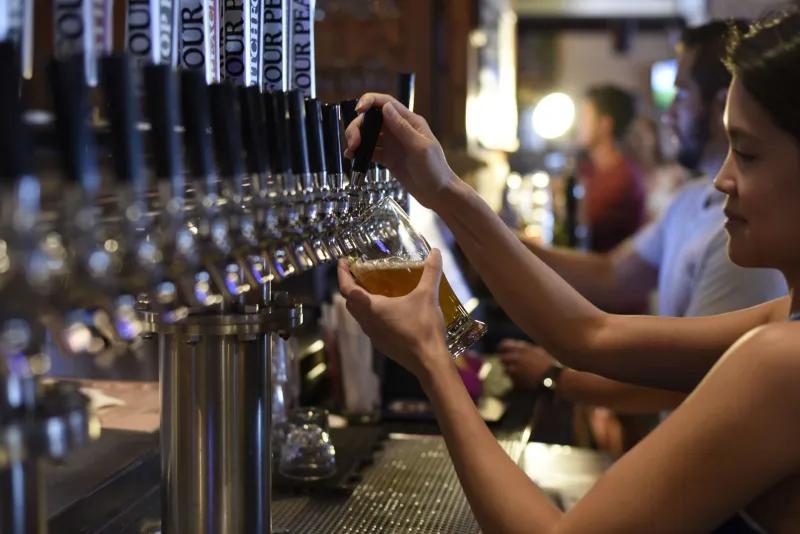
Let's start with what craft beer looked like for a long time: loud, heavily hopped, marketed almost exclusively toward men, and built around a culture of competition that measured seriousness in IBUs and barrel counts. That wasn't universal, but it was dominant enough to shape the industry's identity for decades.
Now look at what's been quietly growing across the American South for the last several years: women-owned and women-led breweries that are doing something genuinely different — not just in the beer they make, but in the way they think about what a brewery is for.
This isn't a feel-good sidebar. It's one of the more significant developments in Southern craft beer right now, and it deserves a real look.
A Different Set of Questions
When women-led breweries talk about their founding stories, a pattern emerges that's distinct from the typical craft beer origin narrative. The classic version goes something like: homebrewer gets obsessed, quits day job, opens taproom, chases the perfect IPA. It's a story about the beer first and the business second.
The women-led version tends to flip that. The question isn't just what do we want to brew? It's who do we want to serve? What kind of space do we want to create? What does this community actually need that it doesn't have yet?
That reorientation — from product-first to community-first — produces breweries that feel different from the moment you walk in. The layout is more welcoming. The menu explanations are written for curious newcomers, not just enthusiasts who already know their hazy from their West Coast. The staff is trained to make people comfortable rather than to demonstrate expertise. And the beer, often, reflects a broader palate — not because women brewers are less technically skilled, but because they're asking different questions about what flavors their community actually wants.
Craft as a Verb, Not a Label
The word craft has gotten complicated in the beer world. It started as a meaningful distinction — small, independent, ingredient-focused — and has since been diluted by marketing departments and ownership structures that stretch the definition past the breaking point.
Women brewers across the South have, in many cases, reclaimed the word by simply living it more literally. Craft as something you do, not something you claim.
That shows up in sourcing decisions. Several women-led Southern breweries have built unusually deep relationships with local farmers and food producers — sourcing honey, fruit, herbs, and specialty grains from within their own counties, sometimes from producers they know personally. The motivations are partly philosophical and partly practical: local sourcing builds community relationships, tells better stories, and produces flavors that can't be replicated anywhere else.
It shows up in recipe development, too. Without the pressure to prove technical machismo through extreme bitterness or barrel program scale, women brewers have often been freer to experiment with softer, more nuanced styles — sessionable beers, culinary-influenced recipes, styles that pair naturally with food rather than competing with it. These aren't less ambitious beers. They're differently ambitious.
Breaking In and Staying In
None of this happened easily, and honesty demands acknowledging that.
The craft beer industry has a documented history of being unwelcoming to women — as employees, as customers, and as business owners. Women who have built breweries in the South have, almost universally, navigated some version of that resistance. Being talked over by distributors. Being questioned about their technical knowledge in ways their male counterparts were not. Having investors assume the brewing was being done by someone else.
The fact that they built these businesses anyway says something. And the specific things they built — inclusive taprooms, mentorship networks, intentional hiring practices — suggest that the experience of breaking through didn't just produce success. It produced a philosophy about what kind of industry they wanted to work in.
Several women-led Southern breweries have invested heavily in training and promoting women within their own organizations, creating a pipeline effect that's beginning to change what the industry looks like at every level. The brewers coming up behind them are more diverse. The industry they're entering is, slowly, more prepared to receive them.
New Audiences, New Conversations
One of the most measurable impacts of women-led breweries in the South is who shows up to drink the beer.
The taprooms that have built reputations for being genuinely welcoming — not just theoretically welcoming, but actually welcoming, in the way the space is designed and the staff behaves and the menu is written — are drawing customers who were not previously craft beer drinkers. Women who felt out of place in traditional taproom environments. People of color who found the culture exclusionary. Older drinkers who assumed craft beer wasn't for them.
This matters for the industry's long-term health in a way that goes beyond politics. The pool of potential craft beer drinkers is far larger than the pool that has historically been served. Breweries that reach that broader audience don't just do a social good — they build more sustainable businesses.
And the beer those new customers encounter is often excellent. Not excellent for a woman-owned brewery — just excellent. Technically sound, creatively interesting, and grounded in a genuine sense of place.
What This Means for Southern Craft Beer
The South has always had a complicated relationship with tradition. There are things worth preserving and things worth challenging, and the skill is in knowing which is which.
Women brewers across the region are doing that discernment work in real time. They're honoring the Southern traditions worth honoring — the importance of hospitality, the value of local ingredients, the centrality of food and gathering — while challenging the traditions that were really just habits, or exclusions that got comfortable.
At Grav South, brewed deep, poured proud means something specific to us: that the beer in the glass carries the weight of real thought, real ingredients, and real intention. What we're seeing from women-led breweries across the South fits that description as well as anything in the region right now.
The revolution, if that's what it is, isn't loud. It's happening in taprooms and brewhouses and recipe notebooks and hiring decisions. It's in the beer that more people are drinking because they finally feel like it was made for them.
That's a pretty good place for a revolution to live.