No Shame in the First Sip: An Honest Guide for Anyone Just Getting Into Craft Beer
Let's get something out of the way first: there is no wrong way to enjoy a beer you actually like. That's the whole point. Everything else in this article is just useful context—not rules, not requirements, not a test you need to pass before you're allowed to have an opinion.
Craft beer can feel intimidating from the outside. The menus are long and full of words that sound made up. The people behind the bar sometimes talk about IBUs and dry-hopping and terroir with an intensity usually reserved for surgery. And if you ask a basic question, you might get an answer that sends you home feeling dumber than when you arrived.
That's not how it should be. So here's what we'd tell a friend who's just getting started.
Start With What You Already Know You Like
Before you try to understand craft beer categories, think about what you already enjoy in general. Do you like bitter things—black coffee, dark chocolate, grapefruit? Or do you lean sweeter—caramel, fruit, honey? Are you drawn to light and refreshing, or rich and heavy?
Your existing taste preferences are the best compass you have. Someone who loves bitter coffee is probably going to enjoy a well-made IPA. Someone who prefers sweet tea and peach cobbler might start with a fruit wheat or a honey blonde. Neither preference is more sophisticated than the other. They're just different.
The mistake most new craft beer drinkers make is trying to like what they think they're supposed to like. Don't do that. Start where you are.
What Does 'Hoppy' Actually Mean?
You're going to see this word everywhere, and it genuinely confuses people because hops do more than one thing.
Hops are a flower used in brewing that contribute bitterness, aroma, and flavor. Depending on the variety and when they're added during brewing, hops can taste like grapefruit, pine, tropical fruit, grass, or even a little like onion (which sounds bad but can be interesting). They're also responsible for the dry, slightly bitter finish you get in many IPAs.
When someone says a beer is "hoppy," they usually mean it's bitter and/or has a strong hop aroma. But here's the nuance: modern craft brewing has produced a whole range of hop-forward beers that are juicy and soft rather than aggressively bitter. New England IPAs, for example, are technically hoppy but often taste more like orange juice than like biting into a grapefruit rind.
So if someone told you IPAs are too bitter and you tried one and it was actually kind of tropical and pleasant, that tracks. The category is wide.
Do You Actually Need Special Glasses?
Short answer: no. Longer answer: also no, but some glasses genuinely do make certain beers smell and taste better, and if you're curious, it's worth experimenting.
The reason different glass shapes exist is mostly about aroma. A tulip glass, for instance, has a slightly inward-curved rim that traps the beer's scent and directs it toward your nose as you drink. Since a lot of what we perceive as flavor is actually smell, this can make a genuinely noticeable difference with aromatic beers like Belgian ales or hazy IPAs.
But drinking a great beer out of a pint glass, a mason jar, or a solo cup doesn't make it a bad beer. If you're at a backyard cookout or watching the game, drink it however it comes. The glass matters less than the beer, and the beer matters less than the company.
If you do want to invest in one good glass, get a tulip or a shaker pint. Either will serve you well across most styles.
How Much Should You Spend?
This is a real question that nobody answers honestly, so here goes: you can have a genuinely excellent craft beer experience for anywhere between $8 and $15 for a four-pack of 16-ounce cans from a solid regional brewery. You don't need to spend $25 on a single bottle of barrel-aged something to understand what good beer tastes like.
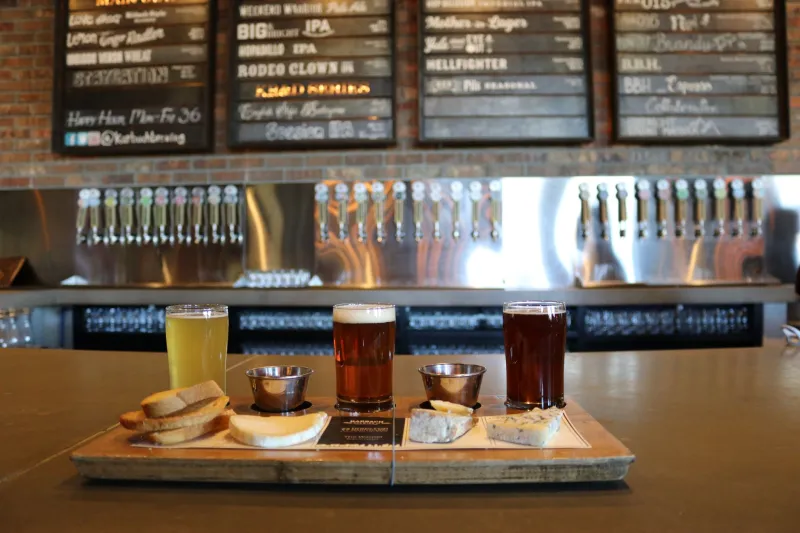
At a taproom, expect to pay $5–$9 for a pint and $2–$5 for a smaller tasting pour. Flight flights—usually four small pours—typically run $10–$16 and are one of the best values in craft beer because they let you try a range without committing to a full glass of something you might not love.
The expensive stuff—the limited releases, the barrel-aged stouts, the collaborative rarities—can be worth it eventually. But they're not where you start. They're where you end up after you've figured out what you actually like.
The Jargon You Can Ignore (For Now)
IBU stands for International Bitterness Units. It's a measurement of hop bitterness. You don't need to know this to enjoy beer. Some breweries put it on menus; some don't. If you see it, a higher number generally means more bitter. That's all you need.
ABV stands for Alcohol By Volume. This one's worth knowing, mainly for practical reasons. A 4.5% session ale and a 10% imperial stout are very different experiences, and it's useful to know which one you're holding.
Mouthfeel is a real word that sounds ridiculous. It refers to the physical texture of the beer in your mouth—thin and watery, or thick and creamy, or somewhere in between. You'll develop your own sense of this naturally. You don't need to say the word out loud if you don't want to.
The Only Rule Worth Following
If you like it, it's a good beer. If you don't like it, it's not the beer for you—and that's completely fine, because there are thousands of other options.
Craft beer at its best is about curiosity, not credentials. Nobody was born knowing what a Märzen is or why dry-hopping changes the flavor profile of an IPA. Everyone who talks confidently about beer today started somewhere uncertain, probably with a face they tried not to make when they tasted something unexpected.
The taproom should feel welcoming. The menu should feel like an invitation. And the person pouring your beer should be rooting for you to find something you love.
We certainly are. Pull up a stool. Let's find you something good.