Pints and People: How Grassroots Beer Clubs Are Quietly Changing Southern Towns
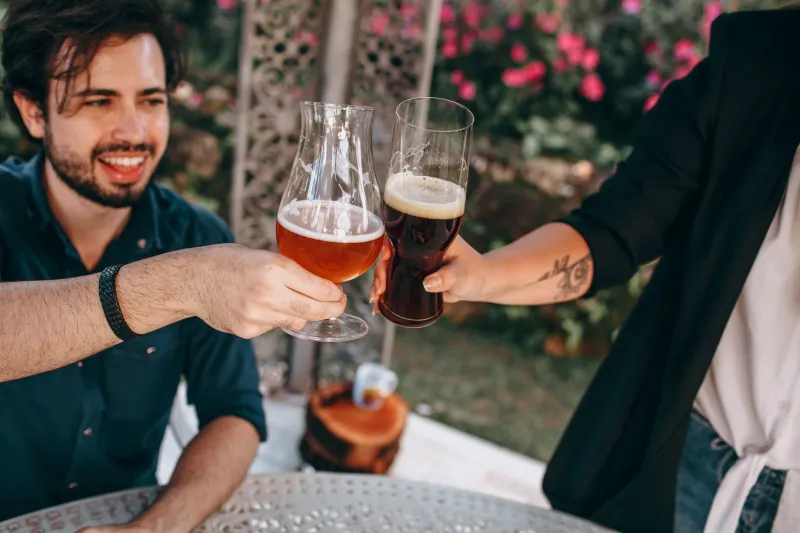
There's a folding table in the back of a tire shop in Greenville, Mississippi, that hosts one of the most earnest beer conversations you'll ever stumble into. Every third Saturday, eight to twelve people crowd around it with whatever they've brought—cans from a road trip, a bomber from the internet, something picked up at the gas station as a joke—and they talk about what's in the glass. Nobody grades on a curve. Nobody has a certification. And somehow, it works.
This is what grassroots beer culture actually looks like in much of the South. Not taprooms with exposed ductwork and chalkboard menus, but living rooms and parking lots and borrowed back rooms where people who care about what they're drinking have decided to care about it together.
How It Usually Starts
Ask any beer club founder how their group got off the ground and you'll almost always get the same answer: one person, one six-pack, one conversation that went longer than expected.
Marcus Thibodaux started the Lafayette Lowgravity Society—yes, that's really what they call it—after a coworker handed him a saison from a small Louisiana brewery and asked what he thought. "I didn't know what I thought," he admits. "So I started paying attention. And then I wanted someone to pay attention with me."
Three years later, the group has seventeen regular members, a shared spreadsheet of every beer they've tried together, and a tradition of ending each meeting with something local. They meet in Marcus's garage, which his wife has diplomatically rebranded as "the situation room."
In Cookeville, Tennessee, a group called the Plateau Pourers started after a library book club fell apart mid-pandemic and a few of the members decided they'd rather talk about beer than zoom-call about literary fiction. "We kept the discussion format," says founder Renata Odom. "Someone brings a beer, someone brings context—where it's from, what style it is, why they picked it—and then we all just... react honestly."
Honesty, it turns out, is a big part of what makes these clubs work.
The Anti-Snob Clause
Pretension is the enemy of a good beer club, and most of the groups we talked to have figured that out early. The Plateau Pourers have an unofficial rule: if someone uses more than two technical terms in a single sentence without explaining them, the group is allowed to throw a napkin at them. Gently. It's still a library crowd.
This commitment to accessibility isn't just about keeping things fun. It's about keeping the door open. In smaller Southern towns especially, craft beer can feel like something that happens somewhere else—in the big cities, for people with more disposable income and more refined palates. Beer clubs push back against that perception by making the conversation human-scaled.
"We've had people show up who've never had anything but Bud Light their whole lives," says Marcus. "And I love that. Because when someone tries a well-made amber ale for the first time and their eyes go wide, that's not a small thing. That's a person discovering that the world is bigger than they thought."
What These Gatherings Actually Produce
Beyond the beer education—which is real, even if it's informal—these clubs are doing something more fundamental. They're giving people a reason to show up somewhere on a regular basis, which is increasingly rare.
Renata talks about a member of the Plateau Pourers who'd recently moved to Cookeville for a job and didn't know a soul. "He came to one meeting, and now he's one of our most enthusiastic members. He's made actual friends. Real ones. Through beer."
In a small town outside Hattiesburg, a group called the Pine Belt Pint Collective has started doing something even more intentional: they pick a brewery to spotlight each month, contact them directly, and ask questions. Sometimes the brewers respond. Sometimes they send samples. Once, a brewer drove two hours to sit in on a tasting of his own beer, which he described afterward as "the weirdest and most meaningful quality control session I've ever done."
That kind of connection—between maker and drinker, between craft and community—is exactly what the best of Southern beer culture is supposed to look like.
The Gravity That Holds It Together
There's something fitting about the fact that these clubs tend to form in places where the nearest craft brewery might be an hour away. The distance creates its own kind of gravity. When you can't just walk in somewhere and be handed a curated experience, you build the experience yourself. You bring what you can find. You share what you know. You fill the gaps with conversation.
That's not a consolation prize. That's community.
The Lafayette Lowgravity Society is planning a road trip this fall—a long weekend through Louisiana and Mississippi hitting as many small breweries as they can manage. Marcus expects it to be chaotic and wonderful. "These people started as strangers who liked beer," he says. "Now they're the people I'd call if something went wrong."
If you're sitting somewhere right now thinking you'd like something like that in your town, here's the honest truth: you don't need a taproom to start it. You need a folding table, a few curious people, and something worth tasting. The rest tends to take care of itself.